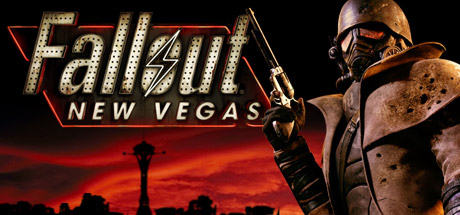
Strap yourselves in folks because I’m about to talk about RPGs again, and that means I’m gonna be talking Fallout again! Alright, alright, I will talk about some other games a bit too, but Fallout really is one of the best go-to examples for everything in RPG game design.
A foundational element in any open-world RPG is player choice. The best choices in RPGs, to my mind, are those that informed by the beliefs and experiences of the player developed over the course of the game. A player’s exposure to a certain faction may cause them to make certain choices related to this faction, or perhaps their socio-economic views can justify a choice otherwise presented as negative. In practise a far more common motivation for player choices is “which one gets me more cool stuff”. It is this motivator which this piece will focus on examining: how the game mechanically incentivises different choices, and in doing so undermines other motivating factors. Otherwise excellently written choices can easily be undermined by one option restricting the player’s access to content.
Surprisingly, my go-to example for this phenomenon is Completely Flawless Game I Have Played Too Much Of, Fallout: New Vegas (see, I can criticise it!). The major factional conflict in New Vegas is between the New California Republic, a flawed democracy that has militarily overreached, and Caesar’s Legion, a fascist state built on slavery and subjugation. On paper this conflict is written incredibly well. The NCR are ideologically superior, but are transparently corrupt and limited in their ability and desire to protect their citizens. Caesar’s Legion are unapologetic monsters, but their leader is educated and has a coherent, logical plan for the future of the wasteland. He views their brutality as a necessary evil in order to re-establish an organised society. The game presents a choice between two flawed and complex factions, and while few will deem the Legion the better choice, it at least requires some thought. However, the game mechanically undermines this by making the Legion a far more restrictive choice in gameplay terms.
Let’s take a look at F:NV‘s world map:

I’ve highlighted the areas with a significant number of NCR quests and NPCs in green, and the areas with the same for Legion in red. There are not only vastly more areas with a NCR presence, but these areas are also centrally located, right next to many neutral quest zones. In contrast, the Legion areas are tucked away in the peripheries, with nothing particularly relevant close to them. The primary issue with this is that decisively siding with the NCR or the Legion turns the other hostile towards you, so not only does choosing the Legion cut off far more quests and resources than choosing the NCR, it also restricts the players movement far more, as the player will be forced to fight off NCR soldiers almost anywhere they go.
How can this be fixed? Well, in most more recent RPGs the solution has been to simply present a more streamlined narrative with choices that don’t significantly affect the player’s ability to play the game. Dragon Age: Inquisition, The Witcher 3, Mass Effect: Andromeda, these games give you choices that only exist in their own small bubble and don’t significantly affect your ability to take on new quests. More far-reaching choices are unconnected to the mechanics of the game. Choosing to cure the Genophage in Mass Effect 3 does not greatly alter the course of the game either from a story perspective or a gameplay one, as this choice is isolated in its own plot cul-de-sac. This is not an inherently bad way of solving the problem, but it does by necessity require that the game restrict the players choices to a smaller range of options with more limited consequences. In the specific case of New Vegas, the issue would be alleviated somewhat if the two major factions were more equally geographically distributed, and possessed a more equal number of quest and loot opportunities. The amount of work this would involve, however, is considerable, and the game’s budget and time restrictions were already tight.
Games like New Vegas, which give you choices which significantly impact the content you’re able to access and so demand re-playing, are a dying breed in the AAA gaming world, and are mostly found in smaller projects. In many ways this is entirely understandable, as the balancing of choices that have actual consequences is delicate, and it’s much easier just to avoid the problem altogether. I for one hope that someone tries to do so again, though. Fingers crossed for Cyberpunk 2077!
Leave a Reply